
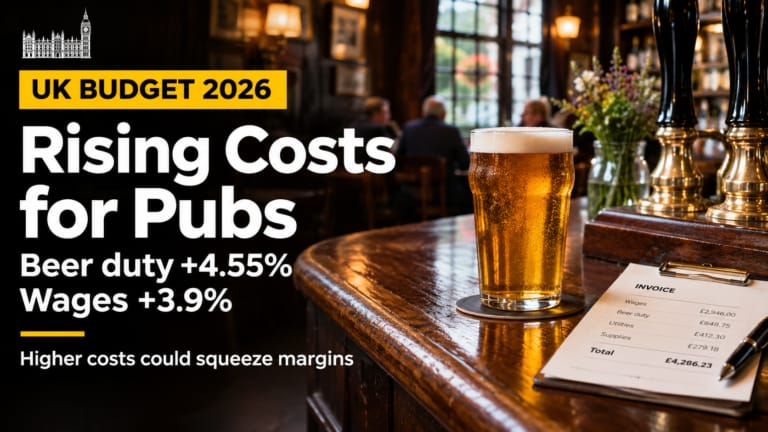
Alcohol duty is increasing by 4.55% and minimum wages will rise by 3.9% in 2027. Despite new business rates support, Britain’s pubs face another year of rising operating costs.
The Autumn Budget 2026 has delivered a mixed picture for Britain’s pub industry.
While the government has announced additional business rates relief and plans to introduce Guest Beer Rights, two significant cost increases are approaching.
From February 2027, alcohol duty will rise across beer, wine, cider and spirits. Just two months later, the National Living Wage and National Minimum Wage will increase.
For pub landlords already balancing staffing costs, energy bills, wholesale beer prices and customer expectations, understanding these changes will be essential.
Here is what the Budget means for your pub, how much the increases could cost and what you can do to protect your business.
UK Budget 2026: Rising Costs at a Glance
- Alcohol duty up 4.55% – Beer, wine, cider and spirits will face increased duty from 1 February 2027.
- Minimum wages up 3.9% – New rates take effect on 1 April 2027.
- National Living Wage rises to £13.21 – An increase of 50p per hour for employees aged 21 and over.
- Higher wholesale beer costs – Breweries and suppliers may pass increased duty costs on to pubs.
- Pressure on pub margins – Higher wages and drinks costs could affect profitability and pint prices.
- No hospitality VAT reduction – The standard VAT rate remains at 20%.
- Support for independent breweries – An additional £10 million per year in Small Producer Relief is intended to help eligible producers.
- Business rates support – Qualifying pubs in England will receive increased business rates relief from April 2027.
1. Alcohol Duty Will Increase by 4.55% from February 2027
One of the most significant announcements for the drinks industry is a further increase in alcohol duty.
From 1 February 2027, duty on alcoholic products will increase by 4.55%, in line with Retail Price Index (RPI) inflation.
The increase applies across beer, wine, cider and spirits, although the amount of duty payable varies according to the type and strength of the drink.
What does this mean for beer prices?
Alcohol duty is generally paid earlier in the supply chain, by producers or importers, but it forms part of the cost of the products purchased by pubs.
When duty increases, breweries and wholesalers may adjust their selling prices to recover the additional costs.
However, an important distinction is that a 4.55% increase in duty does not mean the entire wholesale price of a keg increases by 4.55%.
The increase applies to the duty element of the price.
How much extra duty will a keg cost?
For standard beer between 3.5% and 8.5% ABV, the main duty rate will increase from £22.58 to £23.61 per litre of pure alcohol.
Qualifying draught beer benefits from a reduced duty rate, which will increase from £19.45 to £20.34 per litre of pure alcohol.
For example, a 50-litre keg of 4.5% ABV beer qualifying for Draught Relief would see its duty increase by approximately £2.00 per keg, excluding VAT.
That works out at approximately 2.3p per pint in additional duty.
These figures reflect the duty increase alone, rather than any changes to brewery pricing, distribution costs or wholesale margins. Individual products may also qualify for Small Producer Relief.
Will the price of a pint increase?
Not necessarily by the same amount.
Some breweries and wholesalers may absorb part of the increase, while others may pass it on.
Individual pubs will then need to decide whether to absorb higher purchase costs or adjust their own selling prices.
With customers already conscious of the price of a pint, maintaining competitive pricing while protecting margins could become increasingly challenging.
2. Minimum Wages Rise by 3.9% from April 2027
Another important change for pub operators is the increase in the National Living Wage and National Minimum Wage.
From 1 April 2027, the National Living Wage for employees aged 21 and over will increase from £12.71 to £13.21 per hour.
Minimum wage rates for younger workers and qualifying apprentices will also increase.
New minimum wage rates from April 2027
| Employee age | Current hourly rate | April 2027 |
|---|---|---|
| 21 and over | £12.71 | £13.21 |
| 18–20 | £10.85 | £11.27 |
| Under 18 | £8.00 | £8.31 |
| Apprentice rate | £8.00 | £8.31 |
What could this cost your pub?
Take a pub employing four members of staff aged 21 or over, each working 35 hours per week on the National Living Wage.
The increase of 50p per hour would add:
- £17.50 per employee each week
- £910 per employee annually
- £3,640 annually across four employees
And that’s before considering any additional employer pension contributions, National Insurance costs or knock-on effects on pay rates for more senior staff.
For larger pubs employing more staff, the overall increase could be considerably higher.
While higher wages mean improved earnings for lower-paid employees, pub operators will need to account for the additional expenditure in their staffing budgets.
3. No Reduction in Hospitality VAT
Despite calls from parts of the hospitality industry for a lower VAT rate, the Autumn Budget did not introduce a general VAT reduction for pubs, bars or restaurants.
The standard VAT rate remains at 20%.
For pubs, this means that VAT continues to apply to most food and drink sales at the standard rate.
Why does this matter?
VAT is an important consideration when calculating the profitability of individual products.
For example, a pint sold for £6.00 including VAT represents:
- £5.00 in sales revenue excluding VAT
- £1.00 in VAT
The pub must cover the cost of the beer, staffing and other business expenses from its VAT-exclusive revenue.
With higher alcohol duty and wages approaching, understanding the difference between retail prices, costs and gross profit is especially important.
4. Could Higher Costs Put Pressure on Pub Profitability?
For many pubs, the challenge is not simply one rising cost.
It is the combined effect of several increases arriving at different points in the year.
A pub might face higher beer purchasing costs from February, increased wages from April and continued pressure from energy, maintenance and other operational expenses.
A simple example
Imagine a pub selling 500 pints of draught beer per week.
If its average VAT-exclusive beer cost increases by just 3p per pint, that represents:
- £15 in additional weekly costs
- £780 in additional annual costs
Combine that with the £3,640 illustrative annual wage increase for four employees, and the business faces £4,420 in additional annual costs.
This is an illustration rather than an industry forecast, but it demonstrates how relatively small increases can add up over time.
The 3p beer-cost increase is hypothetical and should not be confused with the calculated alcohol duty increase.
5. Some Support Is Available for Pubs and Breweries
The Budget is not solely about increasing costs.
There are also measures intended to support businesses within the hospitality and drinks sectors.
Increased business rates relief
From April 2027, qualifying pubs in England will receive 35% business rates relief, up from 15%.
The government is also increasing Small Business Rate Relief thresholds for qualifying hospitality properties.
For some pubs, these savings could help offset part of the additional costs associated with higher wages and drinks prices.
Additional support for independent breweries
The government has also announced changes to Small Producer Relief, intended to provide approximately £10 million in additional annual support to over 2,000 eligible small alcohol producers.
These changes could help qualifying independent breweries manage their duty liabilities.
However, this support applies to eligible producers and does not represent a universal reduction in beer duty for pubs.
New Guest Beer Rights
The Budget also includes plans to introduce Guest Beer Rights for qualifying tied pubs in England and Wales.
The proposed changes could give eligible landlords greater freedom to source certain beers outside their existing supply arrangements.
This could provide additional opportunities to explore independent breweries and alternative beer suppliers once the final legislation is introduced.
6. Five Ways Pub Landlords Can Prepare for Rising Costs
With the main increases approaching in February and April 2027, there are practical steps landlords can take to prepare.
Review your wholesale beer prices
Understand how much you currently pay for each keg and how much profit you make per pint.
When suppliers announce price increases, ask for a breakdown of the changes and understand how much relates to alcohol duty.
Recalculate your gross profit margins
Make sure your selling prices reflect your actual VAT-exclusive purchasing costs.
Even relatively small changes in gross profit can have a significant impact over a full year.
Review staffing budgets
Calculate how much the new minimum wage rates will affect your business, including employer on-costs.
Use these figures when preparing your staffing rotas and financial forecasts.
Reduce beer wastage
Poor stock rotation, overpouring and avoidable wastage can all reduce profitability.
Improving stock management could help offset some increased purchasing costs.
Explore different breweries and suppliers
Compare wholesale prices, product ranges, delivery charges and minimum order quantities.
Independent breweries may offer opportunities to introduce different beers and respond to customer preferences.
Love Beer: Helping Pubs Navigate a Changing Beer Market
At Love Beer, we understand that running a successful pub involves balancing quality, customer choice and profitability.
As an independent beer wholesaler, we work to make beer purchasing simpler for pubs and hospitality businesses across the UK.
With access to over 700 independent breweries, we offer an extensive selection of beers, with next-day delivery available on eligible orders.
Whether you’re looking to review your current beer selection, introduce new products or explore independent breweries, Love Beer can help you understand your options.
Are You a Tied Pub? Register Your Interest in Guest Beer Supply
The government’s proposed Guest Beer Rights could give qualifying tied pub tenants new opportunities to stock beers outside their existing supply agreements.
Love Beer is inviting tied pub operators to register their interest in becoming future guest beer customers.
Register Your Pub with Love Beer – Guest Beer Supplier Enquiry
With access to over 700 independent breweries and next-day delivery available, we’re preparing to help landlords make the most of the opportunities these changes could create.
The Bottom Line: Plan Ahead to Protect Your Pub’s Margins
The Autumn Budget 2026 delivers a combination of additional support and new cost pressures for Britain’s pubs.
Alcohol duty is increasing. Minimum wages are rising. And there has been no general reduction in hospitality VAT.
However, increased business rates support, additional relief for small producers and proposed Guest Beer Rights could also create opportunities.
For pub landlords, the priority is understanding how these changes affect their individual businesses and planning accordingly.
Reviewing supplier prices, controlling wastage, budgeting for increased wages and exploring new beer supply opportunities can all play a part in protecting profitability.
Because running a successful pub isn’t just about selling more pints. It’s about making every pint count.
This article is based on the UK Autumn Budget announced on 28 October 2026. Examples are illustrative and actual costs, taxes and relief eligibility will depend on individual circumstances.
Official sources: