Pouring Guinness is not just a technique.
It is a ritual.
In pubs across Ireland — and countless bars worldwide — Guinness is treated differently from any other beer. It’s not rushed. It’s not guessed. It’s not improvised. The perfect pint is a blend of physics, patience and respect for tradition.
Yet at home, even passionate beer fans often struggle to recreate that same theatre. The head collapses. The cascade disappears. The mouthfeel feels off. The magic, somehow, is missing.
This guide exists to fix that.
By the end, you’ll know exactly how to pour Guinness properly at home — why each step matters, how to fine‑tune your setup, and how to achieve the look, taste and feel of a pint poured fresh in Dublin.
Why Pouring Guinness Matters
Most beers forgive a clumsy pour. Guinness does not.
Guinness depends on nitrogen — not just carbonation — to achieve its signature texture and visual precision. Every part of the pour influences how the beer tastes and feels:
- Bubble size: Nitrogen’s ultra‑fine bubbles create the smooth, creamy body that defines Guinness. Larger CO₂ bubbles cause harshness and instability.
- Head density: The creamy cap isn’t decoration; it’s integral to flavour and aroma release.
- Mouthfeel: A properly poured Guinness feels soft and balanced — never fizzy.
- Aroma release: The foam traps roasted aromas and releases them gradually as you drink.
- Visual presentation: The swirl and dome of a well‑settled pint signal craft and care.
A rushed pour doesn’t just look wrong — it tastes wrong. A perfect pint is creamy and smooth; a careless one is thin and lifeless. In Guinness, the pour itself is part of the recipe.
What Makes Guinness Unique
Nitrogen: The Quiet Hero
Unlike most beers that rely on CO₂ for carbonation, Guinness uses a 75 per cent nitrogen / 25 per cent CO₂ blend, known as beer gas. (Some home‑bar systems use 70/30 as a practical alternative.) Nitrogen doesn’t dissolve easily, so it forms micro‑bubbles as it passes through a restrictor plate in the tap. These micro‑bubbles produce the cascade effect, the mousse‑like foam and the silky finish that make Guinness unlike any other stout.
The Cascade Explained
That hypnotic waterfall effect is fluid dynamics in action. Nitrogen bubbles initially move downwards before rising back through the beer, creating the illusion of motion inside the glass — a visible sign that your pour was done correctly.
The Flavour Balance
Guinness is lighter in body than many people expect. Roasted barley adds coffee and cocoa bitterness, while nitrogen softens those edges, balancing sweetness and dryness beautifully. A careful pour preserves this harmony; a poor one breaks it.
Quick fact: Guinness looks black but is actually a deep ruby red when held to the light — the result of roasted barley absorbing and reflecting wavelengths differently.
Essential Tools for Your Home Bar Setup
If you want Guinness at home to taste like it does on tap, the right setup matters.
Glassware
The ideal Guinness glass is tulip‑shaped — wider through the body and narrower near the rim. This shape traps aroma, guides the cascade and supports the creamy head.
For cleanliness, try this lacing test: if, as you drink, the foam leaves neat rings (“lacing”) on the side of the glass, it’s clean. If the head collapses quickly, there’s residue. The test isn’t perfect, but it’s a useful indicator.
Draught Equipment
A proper home setup includes:
- Stout tap with restrictor plate: Creates nitrogen micro‑bubbles for the cascade.
- Mixed‑gas regulator: Maintains steady pressure and balanced flow.
- 75/25 nitrogen/CO₂ gas blend: The official Guinness specification (70/30 also works in non‑commercial systems).
- Cold storage (4–6 °C): Keeps body and texture consistent.
- Clean beer lines: Even light build‑up alters flavour and kills head retention.
Warning: Never use ordinary air to push Guinness through your tap. Air adds oxygen, causing oxidation that dulls flavour and drastically shortens keg life.
Typical Pressure Range: Dialling In
Most Guinness systems run around 28–32 PSI (≈ 2 bar) using the 75/25 gas blend, though exact pressure depends on altitude and line setup.
If the head is too weak → increase pressure slightly.
If it’s all foam → check temperature first, then reduce pressure a little.
Always adjust gradually, not in big jumps.
Longer draught lines require slightly higher pressure to maintain smooth, stable flow. Perfect Guinness is about balance, not brute force.
The Perfect Guinness Pour
Step 1: Prepare the Glass
Use a clean, cold, freshly rinsed glass. Avoid detergent residue or grease — both destroy foam. A chilled, wet surface helps bubbles form evenly.
Step 2: The First Pour
Hold the glass at a 45‑degree angle and open the tap fully in one confident motion. Never trickle the beer — it relies on speed through the restrictor to activate the nitrogen. Fill to about three‑quarters full.
Step 3: The Settle
Now wait. For roughly 90–120 seconds, nitrogen bubbles reorganise and the body clarifies. This is where patience becomes part of the craft — the transition from cloudy to clear, from agitation to calm.
Step 4: The Top‑Up
After settling, push the glass forward and fill straight down the centre until a slight dome of creamy foam forms at the rim. The finished pint should look alive but perfectly levelled.
Step 5: Serve
No spoon work, no foam trimming, no wiping the head. Serve it untouched: complete, elegant and proud.
Guinness trains bartenders globally to follow this same two‑part pour — a method rooted in testing, tradition and craft.
The Science Behind the Two‑Part Pour
The first pour distributes gas through the beer. The settle stabilises the structure, and the top‑up completes the head. It’s not superstition — it’s precision fluid mechanics, refined over decades to create texture, aroma and theatre.
Common Pouring Mistakes and How to Fix Them
Flat Guinness
Usually caused by low pressure or insufficient nitrogen. Check both your gas blend and regulator calibration.
Foamy Guinness
Often due to dirty lines, overly warm temperatures or excess CO₂. Clean thoroughly and ensure storage remains at 4–6 °C.
No Cascade
This happens when there’s no restrictor plate or a standard beer tap is used. Only a true stout faucet can create Guinness’s signature cascade.
Metallic Taste
Almost always from dirty lines, oxidation or old beer. Clean regularly, protect kegs from oxygen exposure, and ensure gas cylinders remain dry and uncontaminated.
The Holy Triangle of Pouring
Most pour issues stem from an imbalance of three factors: temperature, restriction and pressure. Perfecting their relationship ensures consistency — and explains why copying someone else’s PSI setting rarely works.
Expert Tips for Presentation
Temperature
Serve between 6 and 7 °C for optimum flavour and texture. Colder beer dulls flavour; warmer beer collapses foam.
Head Height
Aim for a dense, creamy dome about 15–18 mm (½–¾ inch) thick — proud yet controlled.
Glass Care
Avoid fabric softeners on cloths, never stack wet glasses and keep them away from grease or detergent vapours. Guinness reveals every flaw in glass hygiene.
Pouring Guinness from a Can
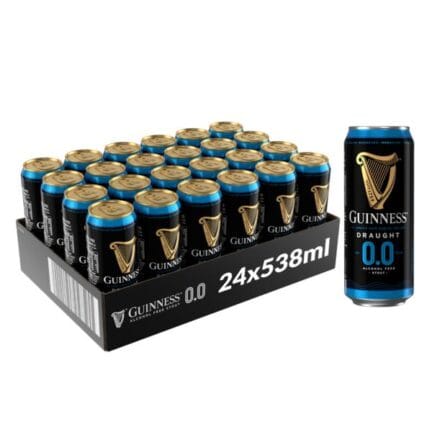
Guinness cans use a nitrogen widget — an innovation introduced by Guinness in 1988 — to replicate draught texture at home.
To pour correctly:
- Open the can completely.
- Pour briskly into the centre of a clean glass.
- Let it settle until the beer clears and the head forms.
- Top up gently if needed.
It won’t completely equal draught Guinness, but poured this way, it comes remarkably close.
Pairing Your Guinness
Think of Guinness like a smooth coffee — roasted, complex and versatile. It pairs beautifully with:
- Beef and stews, where malts mirror rich umami flavours.
- Seafood and oysters, a classic Irish combination.
- Chocolate desserts, echoing Guinness’s cocoa tones.
- Sharp cheeses, balancing bitterness and fat.
- Salty snacks, which enhance sweetness and body.
Maintaining Your Home Bar Setup
Consistency relies on routine.
- Line cleaning: Ideally every 10–14 days, or weekly if you pour frequently or store warm.
- Gas monitoring: Don’t let bottles run empty or pressure fluctuate.
- Keg storage: Keep cold, upright and still.
- Longer lines: Compensate with small pressure increases to sustain flow.
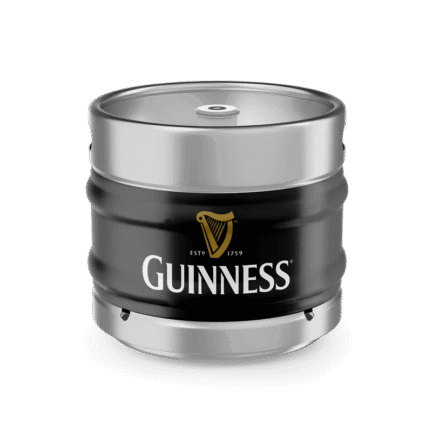
When stored correctly under pressure and refrigeration, a keg of Guinness tastes best for 2–4 weeks after tapping.
Guinness: A Brief Cultural Note
In 1759, Arthur Guinness famously signed a 9,000‑year lease for the brewery site at St James’s Gate — a symbolic act of confidence and longevity rather than a binding contract. Today, every proper pour echoes that same legacy of patience and pride.
The Ritual of Patience
The pause is part of the pleasure. The wait builds anticipation; the settle builds structure. A rushed Guinness is unfinished art. Give it time, and the reward is texture, aroma and calm every bit as rich as the beer itself.
Final Thoughts: The Perfect Pint Is a Choice
Pouring Guinness well isn’t about showmanship — it’s about respect for craft. Behind every balanced pint lies care, timing and understanding. When you pour it correctly, you’re not copying a pub; you’re preserving one of brewing’s finest traditions.
Your Turn:
Pour your next Guinness slowly. Watch the cascade. Let it settle. Taste the patience.
Because the perfect pint isn’t confined to Ireland — it belongs wherever someone takes the time to pour it properly.
Frequently Asked Questions
Can I pour Guinness from a can?
Yes. The nitrogen widget (introduced in 1988) replicates draught texture. Pour firmly into the centre, let it settle, and top gently.
Do I need a wet glass?
Yes. A quick rinse before pouring helps head formation and prevents foam collapse.
What’s the best glass for Guinness?
A branded tulip‑style pint glass — wider in the body, narrower at the rim — optimises aroma and head stability.
Why don’t I get the cascade?
You need mixed gas and a proper stout tap with a restrictor plate. CO₂ alone won’t trigger the nitrogen cascade.
Which gas mix is best — 70/30 or 75/25?
Guinness recommends 75/25. However, 70/30 can work effectively in home‑bar systems with shorter lines.
Why a metallic taste?
Old beer, oxygen exposure or unclean lines. Keep everything clean and well‑pressurised.
How long does Guinness last once tapped?
Consume within 2–4 weeks if stored cold and under consistent pressure.
Can I use CO₂ only?
It’s safe but not proper. CO₂ alone makes Guinness fizzy and acidic — drinkable, but it loses its character.
What pressure should I use?
Start around 28–32 PSI (≈ 2 bar) with a 75/25 gas mix. Make tiny adjustments to suit your setup.
Does line length matter?
Yes. Longer lines need slightly higher pressure to maintain flow and foam stability.
Why is Guinness black?
It only appears black — under light it shines deep ruby red because of roasted barley pigments.